
Summary:
TMJ disorder occurs when the temporomandibular joint (the hinge connecting the jaw to the skull) becomes inflamed, strained, or misaligned.
Common symptoms include jaw pain, clicking or popping sounds, headaches, facial pressure, ear pain, and difficulty opening the mouth.
TMJ disorders are often caused by teeth grinding, bite misalignment, muscle tension, or jaw injury.
Dentists diagnose TMJ disorders through bite analysis, muscle evaluation, and imaging.
Modern treatments include laser therapy, TENS therapy, custom night guards, Botox injections to relax jaw muscles, and full mouth rehabilitation for severe bite problems. Early diagnosis and treatment can relieve pain and restore healthy jaw function.
Jaw pain can start subtly. You may notice a clicking sound when you chew, tension in your face when you wake up, or headaches that seem to come from nowhere. Over time, these symptoms can worsen and affect everyday activities such as eating, speaking, or sleeping.
These issues are often connected to TMJ disorders, which affect the jaw joint and the muscles responsible for chewing and facial movement. Given the broad impact these symptoms may have on daily activities, it is important to understand both the nature of TMJ disorders and the available solutions.
Fortunately, modern dentistry offers a variety of treatments that can relieve pain and restore proper function.
This guide explains what TMJ disorders are, what causes them, and the advanced treatment options available today.
What Is TMJ?
TMJ stands for the temporomandibular joint. This joint connects your lower jaw to your skull and allows your mouth to open, close, and move from side to side.
You rely on this joint constantly throughout the day when you:
- Talk
- Eat
- Yawn
- Smile
- Chew
Because the TMJ is one of the most frequently used joints in the body, it can become strained or misaligned. When this happens, it may lead to temporomandibular joint disorder (TMD), commonly referred to as TMJ disorder.
What are the Common Symptoms of TMJ Disorder?
TMJ disorders can cause a wide range of symptoms. Some people experience only mild discomfort, while others may have persistent pain or difficulty moving their jaw.
Common symptoms include:
- Jaw pain or tenderness
- Clicking or popping sounds when opening or closing the mouth
- Headaches or migraines
- Facial pain or pressure
- Ear pain or ringing in the ears
- Neck or shoulder tension
- Difficulty opening or closing the mouth
- A bite that suddenly feels misaligned
Many patients are surprised to learn that chronic headaches or ear pain can be related to TMJ disorders.
For example, individuals who experience persistent tension headaches or unexplained ear discomfort often find that addressing underlying jaw joint problems leads to significant improvement in these symptoms.
What Causes TMJ Disorders?
TMJ disorders usually develop due to stress on the jaw joint or surrounding muscles. Several factors can contribute to this problem.
Teeth Grinding and Clenching
Grinding or clenching your teeth, often during sleep, is called bruxism. This habit places significant pressure on the jaw joint and surrounding muscles.
Over time, this repeated stress can lead to inflammation, muscle fatigue, and pain.
Bite Misalignment
When the upper and lower teeth do not fit together properly, the jaw muscles must work harder to support normal movement. This imbalance can strain the TMJ and cause discomfort.
Stress and Muscle Tension
Stress often leads to unconscious jaw clenching. The primary chewing muscles can become tight and overworked, leading to pain that spreads to the head, face, and neck.
Injury or Joint Damage
Jaw injuries, arthritis, or damage to the cartilage disc inside the joint can also contribute to TMJ problems.
Why do TMJ Disorders Cause Headaches?
The muscles responsible for chewing are found close to the temples, ears, and neck. When these muscles become inflamed or tense, the pain can spread to surrounding nerves and tissues.
This is why TMJ disorders often cause:
- Tension headaches
- Migraines
- Facial pressure
- Ear discomfort
- Neck stiffness
Treating the underlying jaw dysfunction often helps reduce these symptoms.
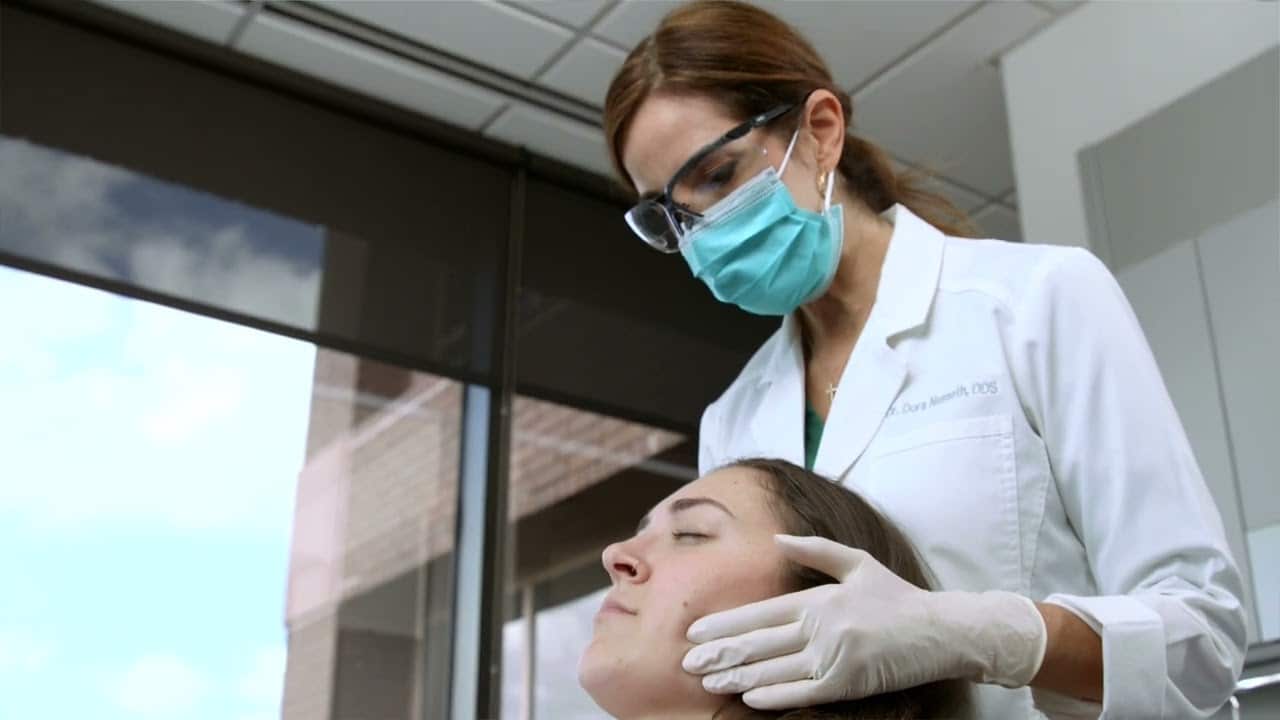
How are TMJ Disorders Diagnosed?
Proper diagnosis is important because TMJ issues may involve both muscle strain and joint dysfunction.
A comprehensive TMJ evaluation may include:
- Bite analysis
- Jaw movement evaluation
- Muscle examination
- Digital imaging of the jaw joint
- Assessment of teeth grinding and wear patterns
This process helps identify the root cause of the problem, allowing for a personalized treatment plan.
What are Advanced Treatment Options for TMJ Disorders?
Modern TMJ care focuses on relieving muscle tension, reducing inflammation, and restoring proper jaw alignment.
Non-surgical therapies for TMJ disorders, such as laser therapy, TENS therapy, Physical Therapy, Botox, and the use of custom appliances, have been shown to provide significant reduction in pain and improvement in jaw function for many patients.
Additionally, these treatments can slow the progression of joint damage, although the degree of benefit may vary depending on the underlying cause and severity of the disorder.
Laser Therapy
Laser therapy uses targeted light energy to stimulate healing in the jaw joint and surrounding muscles.
Benefits may include:
- Reduced inflammation
- Improved blood circulation
- Decreased muscle tension
- Improved jaw mobility
Because laser therapy is non-invasive, it can provide relief for patients experiencing chronic jaw discomfort.
TENS Therapy for TMJ
Transcutaneous Electrical Nerve Stimulation (TENS) uses gentle electrical pulses to relax the jaw muscles.
This therapy helps:
- Reduce muscle tension
- Identify the jaw’s natural resting position
- Improve comfort during treatment
TENS therapy is often used as part of neuromuscular dentistry approaches to TMJ care.
Custom Appliance Therapy
Many TMJ patients benefit from a custom night guard or orthotic appliance.
These devices are designed to:
- Protect teeth from grinding
- Reposition the jaw into a healthier alignment
- Reduce pressure on the joint
- Allow muscles to relax
Unlike store-bought guards, custom appliances are tailored specifically to your bite.
Does Botox work for TMJ Disorders?
Botox injections can temporarily relieve chronic jaw tension by relaxing overactive chewing muscles, although repeated treatments are often necessary to maintain results.
Benefits include reduced jaw pain, muscle tightness, clenching/bruxing, and headaches. While potential risks involve mild pain, bruising, swelling, headache, or difficulty chewing.
Potential side effects may be minor bruising, swelling, redness, or difficulty chewing.
Rare side effects may include temporary muscle weakness or uneven facial expressions if the toxin spreads to nearby muscles.
Botox treatment may help relieve:
- Jaw pain
- Muscle tightness
- Teeth grinding
- Tension headaches
For some patients, Botox can be an effective addition to a comprehensive TMJ treatment plan.
What is Involved in TMJ Full Mouth Rehabilitation?
In more advanced cases where bite misalignment is severe, dentists may recommend full mouth rehabilitation, which is a comprehensive treatment involving restorative procedures such as crowns, bridges, veneers, and orthodontic therapy.
Dawson (2008) describes full mouth rehabilitation to restore function and alignment to all teeth, with the goal of correcting occlusal discrepancies and reestablishing proper jaw mechanics.
Abduo and Tennant (2015) review evidence suggesting that such rehabilitation not only enhances chewing efficiency but also relieves TMJ-related pain and improves overall oral health. Thus, the recommendation for full mouth rehabilitation is supported by both clinical protocols and evidence-based outcomes reported in the literature.
This process restores the bite by repairing worn or damaged teeth and correcting alignment issues.
Full mouth rehabilitation can help stabilize the jaw and provide long-term relief for complex TMJ conditions.